Incubus: Anatomy of an Isolated Sleep Paralysis Experience
A clinical, neurobiological, philosophical, and historical analysis of an acute hypnopompic event.
First Published:
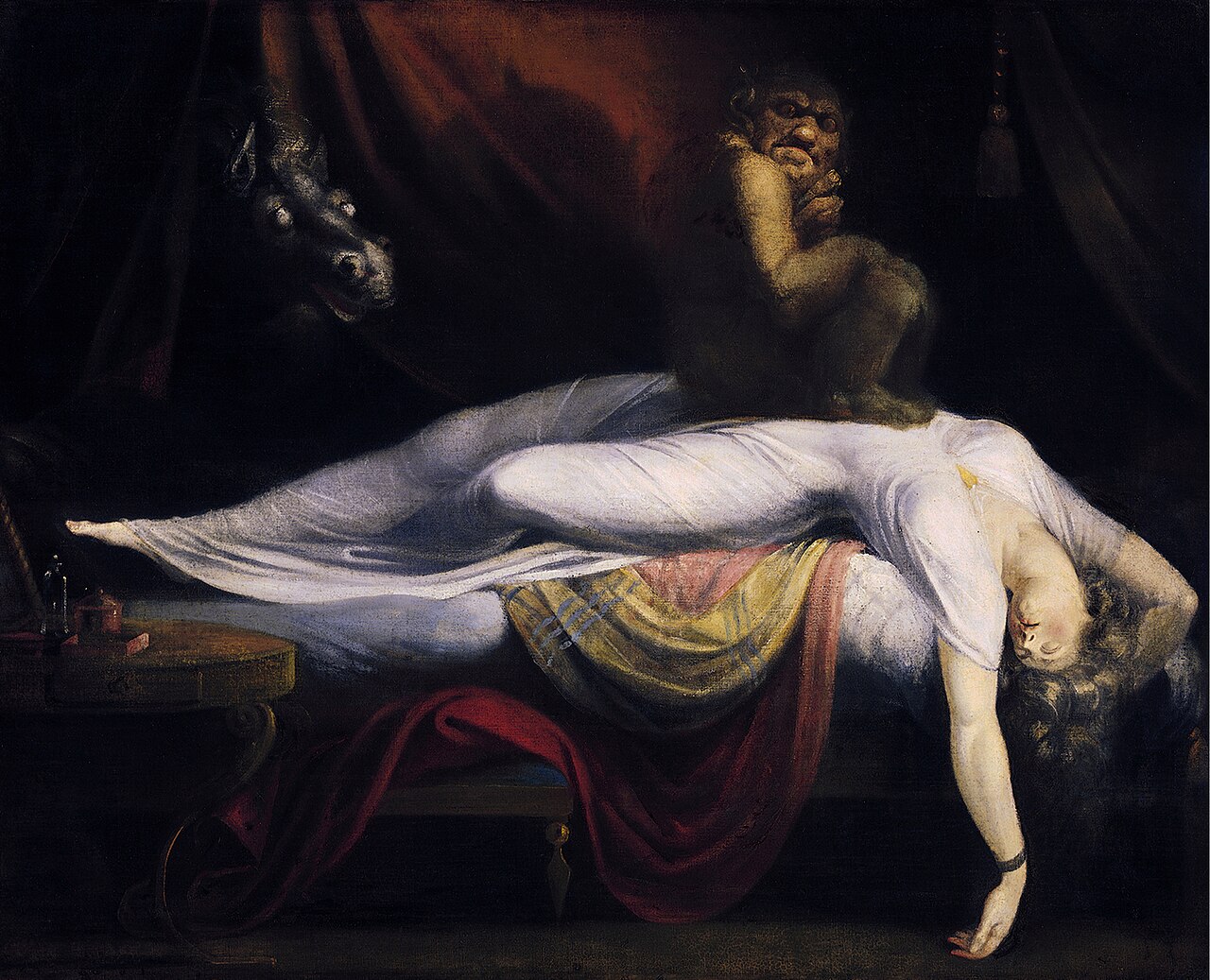
1. The Incident
Narrative Account
The following details recount my own direct personal experience of this isolated episode:
- Age of Onset: 21 years old
- Time & Environment: Late morning in a shared house; the ambient sounds of flatmates moving and talking in the kitchen were clearly audible.
- The State: Awakening into a locked, immobilized physical body while conscious awareness of the external room was fully intact.
- Somatic Sensations:
- Complete inability to move limbs or vocalize despite a desperate urge to shout out.
- A suffocating, immovable weight pressing down directly upon the chest.
- A distinct, terrifying perception of an external, watchful "presence" inside the bedroom.
- The Culmination: The episode reached its peak after approximately one minute with an acute, intense sensation that the testicles were being violently squeezed—the exact moment of maximum terror that prompted the instinctual drive to break through the paralysis.
2. Comparison with Documented Testimonies
In contemporary sleep medicine and neuropsychology (notably categorized by J. Allan Cheyne and colleagues), hypnopompic hallucinations are classified into three primary symptom clusters. This specific episode featured all three with clinical precision:
| Hallucination Cluster | My Personal Experience | Documented Clinical & Historical Context |
|---|---|---|
| A. The Intruder (Hyper-Vigilance & Felt Presence) |
Visceral conviction of an unseen, watchful, and hostile agent inside the room. | Documented across cultures and millennia: the Middle Eastern Jinn, Japanese Kanashibari ("bound by metal"), contemporary Shadow Person accounts, and nocturnal abduction visitations. |
| B. The Incubus (Chest Compression & Suffocation) |
Immovable, suffocating weight pressing directly downward on the sternum. | Latin incubare ("to lie upon"), medieval demons assault sleepers in bed; the Scandinavian Mara (crushing entity, root of nightmare); the Newfoundland Old Hag. |
| C. Somatosensory / Visceral (Genital Pressure & Pain) |
Acute, intense sensation of the testicles being violently squeezed. | Genital sensations are clinically recognized in anonymous surveys but underreported due to stigma; historic records (Malleus Maleficarum) document nocturnal genital seizures and assault. |
3. Neurobiological & Scientific Mechanisms
Neurobiology does not view isolated sleep paralysis as a psychological disorder or illness, but as a temporary dissociated state of consciousness where REM sleep architecture spills over into waking cortical awareness.
       [ WAKING FOREBRAIN ]                   [ REM BRAINSTEM ]
  Conscious awareness of room             Motor neurons locked in place
  Auditory reception (kitchen noise)         GABA & Glycine inhibition
               \                                   /
                \                                 /
             [ DISSOCIATED HYPNOPOMPIC GLITCH ]
             • Inability to move or vocalize
             • Diaphragm-only breathing (crushed chest)
             • Amygdala panic alarm (hallucinates presence)
             • Misinterpreted pelvic nerve signals
REM Atonia Dissociation
During normal REM sleep, the brain actively paralyzes voluntary skeletal muscles to prevent acting out dreams. Specialized neurons in the pons and ventromedial medulla release inhibitory neurotransmitters—primarily GABA and glycine—which hyperpolarize alpha motor neurons in the spinal cord. In sleep paralysis, the ascending reticular activating system wakes the cortex before this motor blockade is cleared.
The "Crushed Chest" Mechanism
In REM sleep, voluntary control of the accessory intercostal muscles of the ribcage is suppressed, leaving respiration almost entirely to automatic diaphragmatic contraction. Attempting to take a voluntary deep chest breath meets resistance, which the waking brain interprets top-down as an external weight crushing the chest.
The Hyperactive Amygdala
The amygdala operates at an elevated baseline during REM. Waking trapped inside an immobilized body with restricted breathing triggers an acute panic alarm. Because the eyes register no physical intruder, the hyper-vigilant mind generates an externalized "presence" to explain the terror.
Genital Sensations & Visceral Transduction
REM sleep involves spontaneous autonomic surges, pelvic blood volume changes, and erratic somatosensory firing. Spontaneous contractions of the pelvic floor or cremasteric spasms, occurring simultaneously with peak panic, are interpreted as an external assault seizing the groin.
Why an Isolated Occurrence?
- Statistical Norm: Experiencing sleep paralysis once or twice in a lifetime—Isolated Sleep Paralysis (ISP)—is the most common outcome, affecting 20% to 30% of the population.
- The Neurodevelopmental Peak: Over 80% of first-time occurrences happen between ages 15 and 25, a window of REM circuit reorganization.
- Late-Morning REM Density: Morning hours feature the longest, most biochemically dense REM periods.
- External Acoustic Triggers: Kitchen sounds caused an abrupt cortical awakening without clearing the brainstem's inhibitory blockade.
- Supine Posture: Sleeping flat on the back increases upper airway resistance and micro-hypoxia, drastically raising the likelihood of ISP.
4. Philosophical Theories
Predictive Processing & The Bayesian Brain
In cognitive science (e.g., Andy Clark), the brain is an inference engine generating top-down hypotheses to predict sensory input. During the episode, the brain receives rapid heart rate, motor failure, restricted chest expansion, and house noises. Seeking the most plausible explanation for being paralyzed and suffocating in mortal danger, it infers an external predatory agent holding the body down.
Embodied Selfhood & The "Split Self"
Our sense of self relies on the seamless feedback loop between intention and movement. When motor commands fail completely, the boundary between the internal "self" and the external "world" dissolves, causing the trapped agency to be experienced as an externalized, opposing entity.
5. Spiritual & Folkloric Hypotheses
Liminal Vulnerability
Prior to the discovery of REM sleep in 1953, the sleep-wake threshold was viewed as a liminal borderland where the astral or energetic body is loosely tethered, leaving the individual exposed to non-physical wanderers or lower-astral entities.
Spiritual Parasitism
In European demonology, Middle Eastern folklore (Qarin / Jinn), and Asian shamanic traditions, these entities were seen as predators feeding on human vital force (prana or psychic energy). Intense suffocation, panic, and genital pressure were believed to maximize energetic release for extraction.
The Cultural Shaping Effect
Cross-cultural anthropology demonstrates that while neurobiology provides the physiological foundation, cultural scripts dictate the imagery: cultures with rich demonological lore experience longer, more elaborate encounters, whereas modern secular sleepers report brief, shadowy silhouettes.